The SpaceX IPO & The AI Trade that Refuses to Die
Six things that mattered this week — including the biggest IPO in history — with a take for traders and a take for investors.
Dear GYP Members,
We hope you enjoy this week’s market article, packed with actionable trading and investing ideas to help you prepare for the week ahead.
The Market Climbs the Wall of Worry
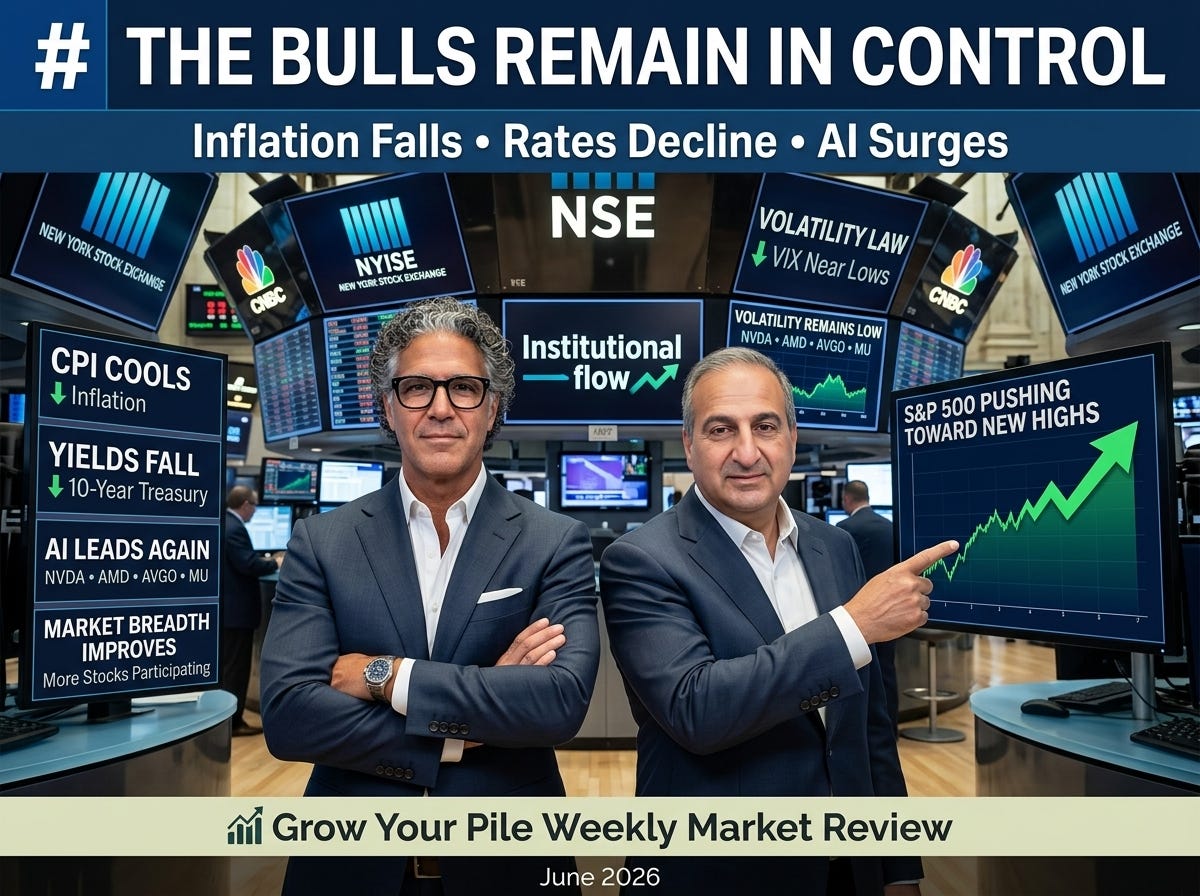
Last week we wrote about the first cracks in the bull market — the nine-week streak snapping, semis crashing $1.3 trillion in a day, and rates roaring back into control. Many investors braced for a deeper correction. Instead, this week reminded us once again that bull markets rarely move in a straight line — but they often frustrate the greatest number of participants along the way.
Here are the six biggest stories traders and investors should be focused on:
1. The AI Trade Refused to Die
The biggest surprise of the week was how quickly buyers returned to AI and semiconductor stocks after last Friday’s brutal selloff. Investors once again stepped into names like NVIDIA, AMD, Broadcom, and Micron, viewing the weakness as an opportunity rather than the start of a larger correction.
Trader Take: The trend remains higher, but momentum is becoming increasingly crowded. Chasing strength becomes more dangerous after every recovery. Let the rebound prove itself — don’t pay up for a name that already snapped back 8–10% off the lows.
Investor Take: The AI story remains intact. Long-term investors continue to view pullbacks as opportunities to accumulate positions in companies expected to benefit from the AI infrastructure buildout. Just keep position sizes honest — last Friday was a live reminder of how fast a crowded trade can reprice.
2. The SpaceX IPO — A Historic Liquidity Drain the Market Absorbed
The marquee event of the week — and the one we flagged last weekend as the real sentiment test — arrived: SpaceX came public in one of the largest IPOs in market history. A debut that size pulls an enormous amount of cash out of existing positions, as institutions and retail alike raise money to chase the new listing. That kind of liquidity drain often pressures the broader market for days.
This time, the market shrugged it off. Demand for the IPO was strong, the cash got reabsorbed, and instead of sagging under the weight of the raise, the indexes moved higher. That is a meaningful tell: when the market can digest the largest capital raise in years and still climb, it tells you risk appetite is firmly back and last Friday’s rout was a shakeout, not the start of something larger.
Trader Take: A successful mega-IPO that the tape absorbs without breaking is a green light on risk appetite — FOMO is alive. But watch the follow-through in the new listing itself; when the hottest IPO of the year starts to fade, it’s often an early sentiment crack. For now, the absorption is bullish confirmation.
Investor Take: Don’t get swept into the IPO hype itself — newly public, hard-to-value names carry outsized risk and lockup dynamics. The signal matters more than the ticker: the market proving it can absorb a historic liquidity event is constructive for the portfolio you already own. Let others chase the debut.
3. Inflation Continued to Cool
This week’s CPI report came in better than expected, reinforcing the narrative that inflation pressures continue to moderate. The market immediately interpreted the data as supportive for risk assets and increased the probability of future Fed rate cuts — a sharp reversal from last week’s hot-jobs scare that put rates back in charge.
Trader Take: Lower inflation supports equities, especially growth stocks. Traders should continue monitoring interest rate expectations because they remain one of the biggest drivers of short-term market direction. The data has flipped back in the bulls’ favor — but it’s the same variable that bit last week, so stay nimble.
Investor Take: Cooling inflation improves the outlook for both corporate earnings and valuation multiples. This remains one of the strongest tailwinds for equities heading into the second half of the year.
4. Treasury Yields Moved Lower
Following the inflation data, Treasury yields declined across much of the curve. For the past several months, higher yields have been one of the primary risks facing equity markets — and the very thing that triggered last week’s selloff. This week provided some relief.
Trader Take: Falling yields continue to support long-duration assets, technology stocks, and growth names. Keep the 10-year at the top of your dashboard — it remains the referee. Yields lower = fade fear; yields backing up again = tighten risk fast.
Investor Take: Lower yields improve financial conditions and make equities more attractive relative to bonds. This remains a constructive backdrop for diversified portfolios — but remember last week’s lesson: when the shock is rates, bonds won’t hedge it. Keep real convexity in place.
5. Volatility Stayed Surprisingly Calm
After last week’s vol spike, fear faded almost as quickly as it arrived. Despite geopolitical uncertainty, elevated valuations, a historic IPO, and a market sitting near record highs, the VIX spent most of the week drifting back toward the low-20s — suggesting investors are once again comfortable with current risk levels.
Trader Take: Low volatility supports premium-selling strategies but also increases the risk of complacency. Historically, some of the sharpest volatility spikes occur when nobody expects them — exactly like last Friday. This is the cheap-insurance window: the best time to own a little protection is when nobody wants it.
Investor Take: Low volatility is generally bullish, but it is also a reminder to maintain proper portfolio hedges and avoid becoming overconfident. The calm is when you buy the umbrella, not when you throw it away.
6. The Market’s Breadth Finally Improved
One of the most encouraging developments this week was improving market participation. For much of this rally, gains were concentrated in a handful of mega-cap technology stocks. This week, we began to see broader participation from financials, industrials, small caps, and cyclicals.
Trader Take: Broader participation often extends rallies and creates new trading opportunities outside the crowded AI trade. Watch for relative strength in the laggards that are finally catching a bid.
Investor Take: Improving breadth is one of the healthiest signs a bull market can produce. Sustainable advances typically require more than just a handful of companies leading the way — this is the kind of internal repair that lengthens cycles.
Bottom Line
A week ago, the story was the first cracks. This week was about resilience.
AI leadership came right back.
The largest IPO in years drained liquidity — and the market absorbed it and rose anyway.
Inflation cooled and yields fell, flipping last week’s rate scare on its head.
Volatility settled back down.
And market breadth — finally — broadened out.
For traders, the message is clear: respect the trend, but don’t chase extended positions, and keep cheap protection on while the calm lets you buy it.
For investors, the message is equally simple: the bull market remains healthy, but risk management still matters after one of the strongest rallies in recent years.
The market continues to climb the wall of worry — and for now, the bulls remain firmly in control.
Have a great weekend.
— Tony Battista & Tony Rihan Grow Your Pile
This is an educational analysis of weekly market activity through Friday, June 12, 2026. Not investment advice. Options and futures involve substantial risk and are not suitable for all investors. Past performance does not guarantee future results.
Not a paid member yet? Join Grow Your Pile →


